



save $50

12 Bourbons That Helped Define its Industry
Forty years ago, bourbon was in trouble. Sales had been falling since the early seventies; vodka was king, and anyone chasing a premium whiskey reached for Scotch. Bourbon was cheap, young and a bit daggy. Today it's one of the most sought-after spirits on the planet, with limited releases selling out in minutes and people queueing for bottles.
Single barrels, barrel-proof releases, small batches, bonded bourbons, port finishes, double-oaked releases, high-rye mash bills, and blended limited editions all exist because someone was willing to try something new.
That turnaround didn't happen by accident. Two handfuls of bottles drove it by breaking the rules. Here's what each one did differently, and why it still matters when you're choosing your next bottle.
Summary: The Game Changers at a Glance
| Year | Bottle | What it changed |
|---|---|---|
| 1984 | Blanton's Original | First single barrel bourbon |
| 1988 | Booker's Bourbon | Uncut, unfiltered barrel proof |
| 1991 | Wild Turkey Rare Breed | Barrel proof as an everyday bottle |
| 1992 | Knob Creek 9 Year | Small batch premium bourbon |
| 2000s | Four Roses Single Barrel | Recipe transparency and barrel picks |
| 2008 | Willett Pot Still Reserve | Packaging as identity |
| 2011 | Angel's Envy Port Finish | Cask finishing |
| 2011 | Colonel E.H. Taylor | Bottled-in-bond revival |
| 2012 | Woodford Reserve Double Oaked | Second-barrel ageing |
| 2013 | Bulleit 10 Year | Aged high-rye bourbon for everyone |
| 2022 | Kentucky Owl Batch 12 | The blender as the star |
| 2023 | Maker's Mark Cellar Aged | Cool-cellar maturation |
Laying the Foundations. Part One — 1984 to the 2000s
Blanton's Original
Buffalo Trace (then George T. Stagg Distillery) • Frankfort, Kentucky • 1984
The impact: Created the single barrel category, proved bourbon could be super-premium, and made it collectible.
In 1984, master distiller Elmer T. Lee was a year off retirement, and bourbon was at a low point. He remembered how Colonel Albert B. Blanton, who ran the distillery for decades, picked out special "honey barrels" from the middle of Warehouse H and bottled them one barrel at a time for important guests.
Lee turned that old habit into a product. Blanton's was the first modern bourbon sold as a single barrel, with each bottle drawn from one cask and no blending to smooth out the differences. Add the round grenade-style bottle and the little racehorse stopper (there are eight of them, and collectors chase the full set) and you had bourbon that looked and felt like a luxury item.
The Kentucky Distillers' Association later credited the premium market Lee pioneered as a major factor in bourbon's recovery.
Booker's Bourbon
Jim Beam • Clermont, Kentucky • 1988
The impact: It brought uncut, unfiltered barrel-proof bourbon to the public and started the appetite for full-strength releases.
Booker Noe was Jim Beam's grandson and the distillery's master distiller for more than 40 years. His favourite bourbon wasn't anything on the shelf. It was whiskey poured straight from the barrel, uncut and unfiltered, which he bottled and handed out to mates and family as gifts.
In 1988, Beam put it on sale as a limited run of just 1,000 cases. Booker's is bottled at whatever strength it comes out of the barrel, usually somewhere between about 121 and 130 proof, with no water added and no chill filtering. Every batch is a bit different, and the label tells you that batch's proof and age.
Back then, almost all bourbon was cut down to a standard strength before bottling. Booker's showed there were drinkers who wanted it the way the distiller tasted it in the warehouse: big, bold and a bit wild. It later joined Beam's Small Batch Collection in 1992, and it's still the strongest in the line.
Wild Turkey Rare Breed
Wild Turkey • Lawrenceburg, Kentucky • 1991
The impact: Made barrel-proof bourbon an everyday shelf bottle and showed that blending different ages at full strength could be a flagship.
Wild Turkey has always done things its own way, mostly thanks to Jimmy Russell, who started at the distillery in 1954 and became one of bourbon's most respected master distillers. The distillery barrels its whiskey at a lower strength than most, which means less water goes in at the end, and more flavour stays in the bottle.
Rare Breed, launched in 1991, took that idea further. It's a barrel proof blend of 6, 8 and 12 year old Wild Turkey, bottled with no water added. The exact proof has moved around over the years (it now sits at 116.8), but the idea hasn't changed.
Where Booker's is a single batch that changes each release, Rare Breed was a barrel-proof bourbon you could find on the shelf every day, at a fair price. It's one of the longest-running barrel-proof bourbons on the market, and it made full-strength part of the everyday range instead of a special occasion.
Knob Creek 9 Year
Jim Beam • Clermont, Kentucky • 1992
In 1992, Booker Noe followed up with the Small Batch Bourbon Collection: Booker's, Baker's, Basil Hayden's and Knob Creek. Knob Creek was the one built for the everyday drinker who wanted more. Nine years old, 100 proof, and styled on the full-flavoured bourbon of the pre-Prohibition days.
It gave people a reason to spend a bit more without needing to hunt down anything rare. It also put the phrase "small batch" on the map, a term that now appears on hundreds of labels.
Worth knowing: Knob Creek dropped the 9-year age statement for a few years during the bourbon boom when aged stock got tight, then brought it back in 2021. That return was a big deal for fans, and a sign of how much age statements matter to bourbon buyers.
The impact: Launched the small batch movement and set the template for bold, aged, fairly priced premium bourbon.
Four Roses Single Barrel
Four Roses • Lawrenceburg, Kentucky • Returned to the US in the 2000s
The impact: Brought a lost name home, made transparency a selling point, and helped build today's barrel pick culture.
Four Roses was one of America's best-selling bourbons before the Second World War. Then Seagram bought it and made a strange call: it sold the real Kentucky straight bourbon only overseas, mostly in Europe and Japan, while Americans got a cheap blended whiskey with the Four Roses name on it. For decades the brand was a punchline at home.
Japanese brewer Kirin bought Four Roses in 2002, and master distiller Jim Rutledge set about bringing the proper stuff back to the US. The Single Barrel, bottled at 100 proof, became its flagship.
What set Four Roses apart was how openly it talked about how it makes its bourbon. It uses two mash bills and five yeast strains to make ten different bourbon recipes, and it tells you exactly which one is in your bottle using a four-letter code (the Single Barrel is OBSV). No one else was that upfront. It got drinkers thinking about how yeast and grain change flavour, and it fuelled the private barrel pick scene, where retailers and clubs select their own barrels.
The Boom Years and Beyond
Part Two — 2008 to today
By the late 2000s, the foundations were in place and bourbon was growing fast. The next wave pushed in new directions: packaging, finishing, heritage, blending and maturation.
Willett Pot Still Reserve
Willett Distillery • Bardstown, Kentucky • 2008
The impact: Proved a bottle's shape could make a bourbon instantly recognisable, and showed a family bottler could build a cult brand while rebuilding its own distillery.
You know this one before you read the label. Willett Pot Still Reserve comes in a bottle shaped like the family's copper pot still, built by Louisville's Vendome Copper & Brass Works. The late Even Kulsveen came up with the bottle idea after taking over the business with his wife, Martha, the daughter of Thompson Willett.
When it launched in 2008, it was a single barrel bourbon, and it won a Gold Medal for taste and a Double Gold for design at the San Francisco World Spirits Competition that year. Early batches were sourced from another distillery, since Willett didn't restart its own stills until 2012. Today it's made in-house and sold as a small batch.
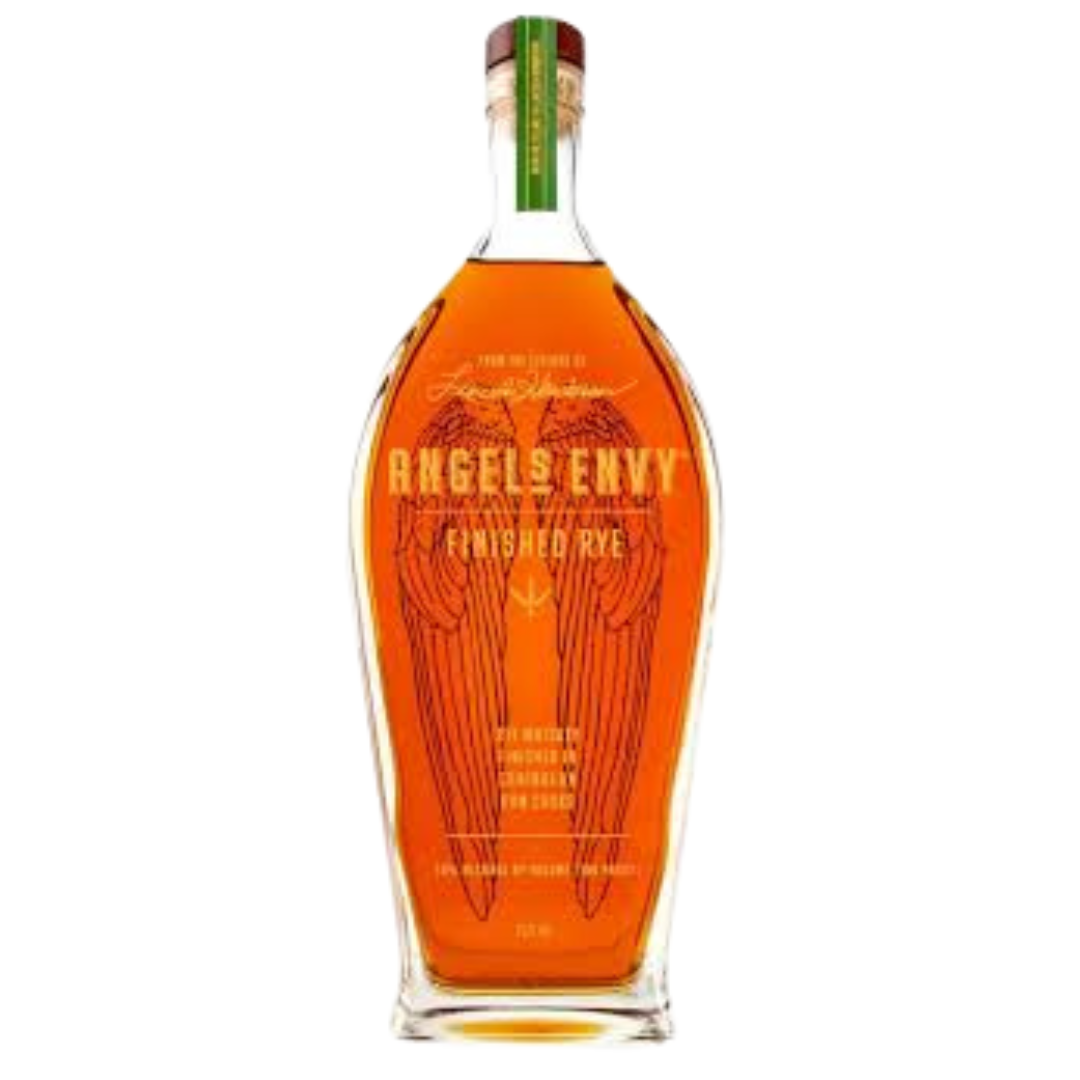
Angel's Envy Port Finish
Angel's Envy • Louisville, Kentucky • 2011
The impact: Took cask finishing mainstream and showed a non-distiller producer could build a premium brand on a strong idea.
Lincoln Henderson spent decades as Brown-Forman's master distiller and helped create Woodford Reserve. In retirement, he teamed up with his son Wes to try something most of the industry wouldn't touch: finishing bourbon in port wine barrels.
Traditionalists weren't happy. Because the finish takes it outside the strict rules, the label reads "Kentucky straight bourbon whiskey finished in port wine barrels". Drinkers didn't care. It was smooth, rich and a bit fruity, and it sold. Bacardi bought the brand in 2015, and the Louisville distillery opened in 2016.
Today you'll find bourbons finished in sherry, rum, cognac, maple, wine and even beer barrels. Most of that shelf traces back to this bottle.
Colonel E.H. Taylor Small Batch
Buffalo Trace • Frankfort, Kentucky • 2011 onward
The impact: Made bottled-in-bond desirable again and turned a 19th-century quality law into a modern selling point.
Colonel Edmund Haynes Taylor Jr. was one of the key figures behind the Bottled-in-Bond Act of 1897. Back then, plenty of "whiskey" was cut with who knows what, and the Act gave buyers a guarantee: distilled by one distillery in one season, aged at least four years in a government-bonded warehouse, and bottled at 100 proof.
By the 2000s, "bottled-in-bond" had become a dusty bottom-shelf term that most drinkers ignored. Buffalo Trace revived Taylor's name from 2011 with a range of bonded bourbons in heritage-style tubes and labels, pitching bottled-in-bond as a mark of quality instead of a bargain.
It worked. Other distilleries followed with their own bonded releases, and the Taylor range became one of the most wanted allocated bottles of the boom.
Woodford Reserve Double Oaked
Woodford Reserve • Versailles, Kentucky • 2012
The impact: Popularised re-barrelling into a second new oak barrel, now a standard tool for premium bourbon.
Double Oaked takes fully matured Woodford Reserve and puts it into a second new barrel. That second barrel is heavily toasted and only lightly charred, which pulls out more sweetness from the wood. The result is rich and sweet, with lots of caramel, vanilla and dark chocolate.
The idea wasn't complicated, but it was new, and it became one of the brand's biggest successes. It showed distilleries they could add depth without just waiting more years. The wave of "double barrel", "toasted barrel" and "second barrel" bourbons since then has followed its lead.
Bulleit Bourbon 10 Year
Bulleit • Kentucky • 2013
The impact: Helped make high-rye bourbon a mainstream style and put an affordable, well-aged bottle in front of a new generation.
Tom Bulleit revived his family's name in 1987, drawing on a high-rye recipe linked to his great-great-grandfather Augustus. Seagram bought the brand in 1997, launched it across the US in 1999, and it passed to Diageo soon after. Its mash bill of 68% corn, 28% rye, and 4% malted barley has much more rye than most bourbons, making it spicier and punchier. With its frontier-style bottle, it became a bartender favourite at the height of the cocktail revival.
The 10 Year arrived in 2013. Same recipe, at least ten years in oak, bottled at 91.2 proof. It gave a hugely popular mixing bourbon a proper sipping version with a double-digit age statement, at a price that didn't sting.
Kentucky Owl Batch 12
Kentucky Owl • Bardstown, Kentucky • Released November 2022
The impact: Put the master blender front and centre and helped create the ultra-premium blended bourbon category.
The Kentucky Owl name dates back to 1879, but the brand disappeared with Prohibition. Dixon Dedman, a descendant of the founder, brought it back in 2014 with Batch #1, the first Kentucky Owl bourbon since Prohibition. The Stoli Group bought the brand in 2017, and master blender John Rhea took over the batches.
Kentucky Owl doesn't sell itself on a single distillery or a single barrel. It sells the blender's skill. Batch 12 combines 7 to 14 year old bourbons with two different 4 year old bourbons, bottled at 115.8 proof, and launched at around US$400.
That price divided opinion, and so did the lack of detail on mash bills and blend percentages. But the brand showed there was a luxury market for blended bourbon, where the blender is the star. That idea has since spread across the industry.
Maker's Mark Cellar Aged 2025
Maker's Mark • Loretto, Kentucky • Series launched 2023
The impact: Challenged the idea that older bourbon has to mean more oak, and made the ageing environment itself the selling point.
For most of its life, Maker's Mark avoided old bourbon. The brand's line was that it bottles by taste, at around six to seven years, instead of chasing age. The Cellar Aged series changed that, and it was the brand's first big, high-priced annual limited release.
The twist is where it ages. After years in the usual rickhouses, the bourbon finishes in a limestone cellar built into the hill at the distillery, where it sits at a cool, steady temperature of around 8°C year-round. The distillery says the cold slows how quickly the bourbon pulls tannins from the wood, so it ages without the bitter, over-oaked taste that long ageing often brings.
The 2025 edition is the oldest Maker's Mark ever released: 74% 11-year-old, 10% 13-year-old, and 16% 14-year-old bourbon, bottled at 112.9 proof (56.45% ABV). Expect brown sugar, fudge, toasted almond, dark cherry and a long butterscotch finish.
To access this collection and try any of these for yourself, go to: 12 Bourbons That Helped Define Its Industry